
The Biggest Challenges in Industry and Their Solutions
Uncategorized

The Biggest Challenges in Industry and Their Solutions

The Biggest Challenges in Industry and Their Solutions Introduction: Understanding the Modern Industrial Landscape Industries around the world are developing at an unprecedented rate. Technological advancements, changing customer expectations, global competition, and economic uncertainties have transformed the way organizations operate. As a result, businesses across various sectors face numerous challenges that can affect productivity, profitability, and long-term growth. However, every challenge presents an opportunity for improvement and innovation. Organizations that identify obstacles early and implement effective solutions can strengthen their competitive advantage and achieve sustainable success. Therefore, understanding the most significant industrial challenges and their corresponding solutions is essential for leaders, managers, and stakeholders seeking to thrive in today’s dynamic business environment. 1. Rapid Technological Changes and Digital Transformation One of the biggest challenges facing industries today is keeping pace with technological advancements. New technologies emerge regularly, making existing systems and processes obsolete. Consequently, businesses often struggle to adopt innovative solutions while maintaining operational continuity. Furthermore, digital transformation requires substantial investments in infrastructure, software, and employee training. Many organizations hesitate because of financial concerns or uncertainty regarding the return on investment. Nevertheless, delaying digital adoption can result in decreased competitiveness and reduced market relevance. Solution Organizations should develop a strategic digital transformation roadmap that aligns technology investments with business goals. Additionally, they should prioritize scalable technologies that can adapt to future requirements. Furthermore, firms should encourage an environment of constant learning. By investing in employee training and development programs, organizations can ensure that their workforce remains capable of utilizing new technologies effectively. 2. Workforce Shortages and Talent Acquisition Finding and retaining qualified employees has become increasingly difficult across many industries. As skilled workers retire and workforce expectations evolve, organizations often experience talent shortages that hinder growth and productivity. In addition, employee turnover can significantly increase recruitment and training costs. When experienced workers leave, businesses may also lose valuable institutional knowledge and expertise. Solution Companies should focus on creating attractive workplace environments that promote employee satisfaction and career growth. Competitive compensation packages, flexible work arrangements, and professional development opportunities can help attract top talent. Furthermore, organizations should establish partnerships with educational institutions and vocational training centers. These collaborations can create a pipeline of skilled workers while helping students gain practical industry experience. 3. Supply Chain Disruptions Supply chain disruptions have become a major concern for industries worldwide. Natural disasters, geopolitical conflicts, transportation issues, and economic instability can interrupt the flow of goods and materials. As a result, businesses may face production delays, increased costs, and dissatisfied customers. Moreover, relying heavily on a single supplier or region can increase vulnerability to unexpected disruptions. Solution Organizations should diversify their supplier networks to reduce dependency on a single source. By maintaining relationships with multiple suppliers, companies can improve resilience and minimize risks. Additionally, businesses should leverage data analytics and supply chain management software to monitor operations in real time. This proactive approach enables organizations to identify potential issues before they escalate into significant problems. 4. Rising Operational Costs Many industries are experiencing increasing operational costs due to inflation, energy expenses, labor costs, and raw material price fluctuations. Consequently, maintaining profitability has become more challenging than ever. At the same time, customers expect high-quality products and services at competitive prices. Therefore, organizations must balance cost management with customer satisfaction and product excellence. Solution Businesses should conduct regular cost analyses to identify inefficiencies and opportunities for improvement. Process optimization and automation can significantly reduce operational expenses while enhancing productivity. Furthermore, organizations should invest in energy-efficient technologies and sustainable practices. Although these initiatives may require initial investment, they often generate long-term cost savings and environmental benefits. 5. Increasing Customer Expectations Modern customers expect personalized experiences, rapid service delivery, and consistent quality. Additionally, they have access to extensive information and alternatives, making them more demanding than ever before. Consequently, businesses that fail to meet customer expectations risk losing market share and damaging their reputation. Therefore, customer satisfaction has become a critical success factor across industries. Solution Organizations should actively collect customer feedback through surveys, reviews, and direct interactions. This information can help businesses understand customer needs and identify areas for improvement. Moreover, companies should implement customer relationship management systems to enhance communication and personalize customer experiences. By building stronger relationships, businesses can improve customer loyalty and retention. 6. Cybersecurity Threats and Data Protection As industries become increasingly digital, cybersecurity risks continue to grow. Cyberattacks, data breaches, and ransomware outbreaks can have a substantial financial and reputational impact. Furthermore, organizations must comply with various data protection regulations to safeguard customer and employee information. Failure to do so may result in significant fines and legal implications. Solution Companies should implement comprehensive cybersecurity strategies that include firewalls, encryption, multi-factor authentication, and regular security audits. These methods can considerably lower the vulnerability to cyber assaults. Additionally, employee awareness training is essential. Since human error often contributes to security breaches, educating staff about cybersecurity best practices can strengthen organizational defenses. 7. Environmental Sustainability and Regulatory Compliance Environmental concerns are becoming increasingly important for businesses, governments, and consumers. Consequently, industries face growing pressure to reduce their environmental impact and adopt sustainable practices. At the same time, regulatory requirements continue to change. Organizations must navigate complex compliance frameworks while maintaining operational efficiency and profitability. Solution Businesses should integrate sustainability into their core strategies rather than treating it as a separate initiative. Sustainable manufacturing, waste reduction, and resource conservation can improve both environmental performance and business outcomes. Moreover, organizations should establish compliance management systems to monitor regulatory changes and ensure adherence to relevant requirements. This proactive approach can prevent costly violations and enhance corporate reputation. 8. Global Competition and Market Volatility Globalization has increased competition across virtually every industry. Companies must compete not only with local businesses but also with international organizations that may offer lower costs or unique advantages. Additionally, market conditions can change rapidly due to economic shifts, technological innovations, and consumer behavior changes. As a result, businesses must remain agile and adaptable. Solution Organizations should focus on developing unique value propositions that
How We Helped a Client Achieve Result
Uncategorized

How We Helped a Client Achieve Result

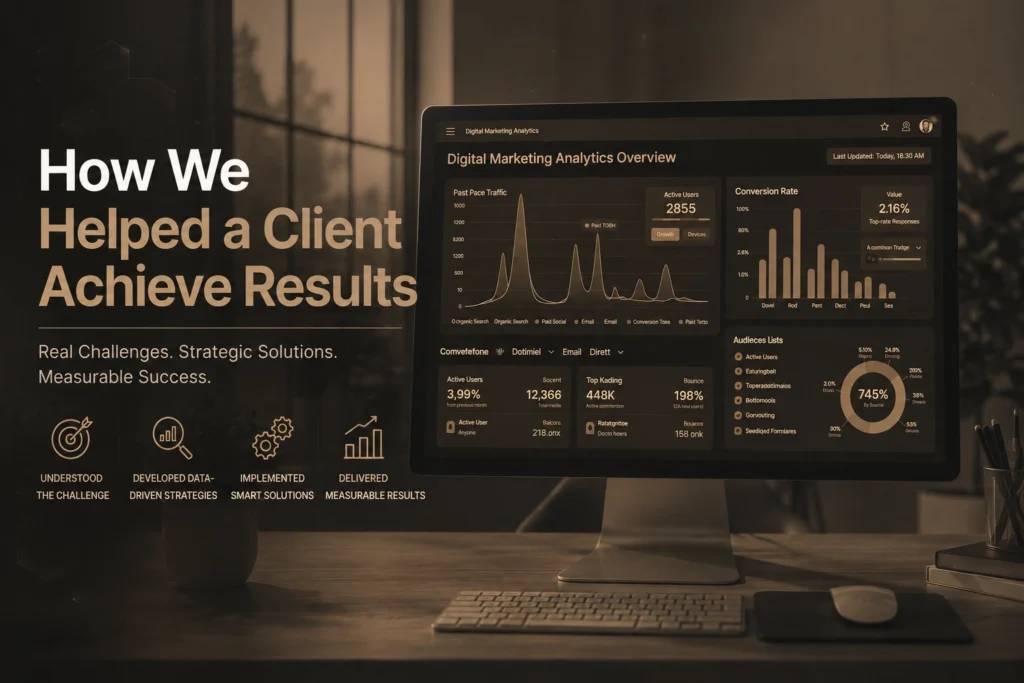
How We Helped a Client Achieve Result Introduction: Transforming Business Goals into Measurable Results Every business strives for growth; however, achieving sustainable growth requires more than ambition alone. Companies often invest significant resources in marketing, sales, and technology, yet many still struggle to generate consistent results. Consequently, they find themselves searching for strategies that can deliver measurable outcomes while maximizing their return on investment. This case study highlights how our team helped a client achieve a remarkable 300% increase in qualified leads. Through careful planning, data-driven decision-making, and strategic execution, we transformed a challenging situation into a success story. Furthermore, this journey demonstrates how the right approach can create lasting business impact. Understanding the Client’s Initial Challenges Before implementing any solution, we conducted a thorough assessment of the client’s existing marketing and sales processes. Although the company had a strong product offering and a dedicated team, it faced several obstacles that limited growth opportunities. As a result, lead generation efforts produced inconsistent outcomes and failed to meet business objectives. Moreover, the client struggled with low website engagement, ineffective conversion pathways, and limited visibility in key market segments. Because these issues affected multiple areas of the business, it became essential to develop a comprehensive strategy rather than focusing on isolated improvements. Conducting a Comprehensive Business Analysis To build an effective roadmap, we first gathered extensive data regarding customer behavior, market trends, and competitor performance. By analyzing these factors, we identified critical gaps that prevented the client from reaching its target audience effectively. In addition, we reviewed website analytics, customer journeys, and lead-generation channels. This process allowed us to uncover valuable insights about user behavior. As a result, we obtained a clear insight of where prospects disengaged and what changes may greatly increase performance. Developing a Customized Growth Strategy After completing the analysis phase, we designed a tailored growth strategy aligned with the client’s objectives. Rather than relying on generic solutions, we focused on creating a plan that addressed the company’s unique challenges and opportunities. Furthermore, we established measurable goals, defined key performance indicators, and prioritized initiatives based on potential impact. This strategic framework ensured that every action contributed directly to business growth. As a result, the client gained clarity and confidence regarding the path forward. Enhancing the Client’s Digital Presence A strong digital presence plays a vital role in attracting and converting potential customers. Therefore, we implemented a series of improvements designed to increase online visibility and strengthen brand credibility. First, we optimized the website’s structure, content, and user experience. Additionally, we improved navigation pathways and simplified conversion processes. These enhancements made it easier for visitors to find information and take desired actions. Consequently, user engagement increased significantly across all major channels. Implementing Data-Driven Marketing Campaigns With a solid basis in place, we began customized marketing campaigns based on audience insights and performance metrics. Rather than relying on assumptions, every campaign decision stemmed from measurable evidence and customer behavior patterns. Moreover, we continuously monitored campaign performance and adjusted strategies in real time. Through ongoing optimization, we improved targeting accuracy, increased engagement rates, and reduced acquisition costs. As a result, marketing efforts generated a substantially higher volume of qualified prospects. Optimizing the Lead Conversion Process Generating traffic alone does not guarantee success. Therefore, we focused equally on improving lead conversion rates throughout the customer journey. By analyzing conversion bottlenecks, we identified opportunities to streamline interactions and eliminate friction points. Additionally, we redesigned landing pages, refined calls-to-action, and improved form completion processes. These changes encouraged more visitors to engage with the business. Consequently, the conversion rate increased steadily, leading to a significant rise in qualified leads. Leveraging Continuous Testing and Improvement Successful growth requires continuous refinement. Therefore, we adopted an ongoing testing methodology that allowed us to evaluate performance and identify opportunities for improvement. Every adjustment was supported by measurable data and strategic objectives. Furthermore, we conducted regular A/B testing across various marketing assets and conversion points. This approach allowed us to identify which elements gave the best results. As a result, campaign effectiveness improved consistently over time while minimizing unnecessary expenditures. Achieving Outstanding Results The combined impact of these initiatives produced impressive outcomes. Within a relatively short period, the client experienced a 300% increase in qualified leads. Moreover, website engagement metrics improved significantly, demonstrating stronger audience interest and interaction. In addition, conversion rates increased, customer acquisition costs decreased, and overall marketing efficiency improved substantially. Because each improvement contributed to broader business goals, the client achieved sustainable growth rather than temporary gains. Consequently, the organization positioned itself for long-term success in a competitive marketplace. Building a Foundation for Long-Term Growth While achieving immediate results was important, our primary objective extended beyond short-term success. Therefore, we focused on creating scalable systems and processes that would continue delivering value over time. Additionally, we provided ongoing guidance and strategic recommendations to support future growth initiatives. By empowering the client with actionable insights and proven methodologies, we ensured that the organization could continue building upon its achievements. As a result, the client gained both confidence and capability for future expansion. Key Lessons Learned from the Project Every successful project offers valuable lessons that can benefit other organizations facing similar challenges. One of the most important takeaways is the importance of understanding customer behavior before implementing solutions. Without accurate insights, even well-intentioned strategies may fail to achieve desired outcomes. Another critical lesson involves the value of continuous optimization. Markets evolve rapidly, and customer expectations change over time. As a result, firms must remain adaptive and dedicated to continuous improvement. By embracing data-driven decision-making and strategic flexibility, organizations can maintain a competitive advantage while driving consistent growth. Conclusion: Turning Challenges into Growth Opportunities This success story demonstrates how a strategic, data-driven approach can transform business performance. We helped our customer achieve a phenomenal 300% increase in quality leads by identifying obstacles, developing unique solutions, and constantly optimizing execution. More importantly, the project established a foundation for sustained success. We collaborate, innovate, and take measurable actions. converted obstacles into

SEO vs Paid Ads
Uncategorized

SEO vs Paid Ads: Which Delivers Better ROI?

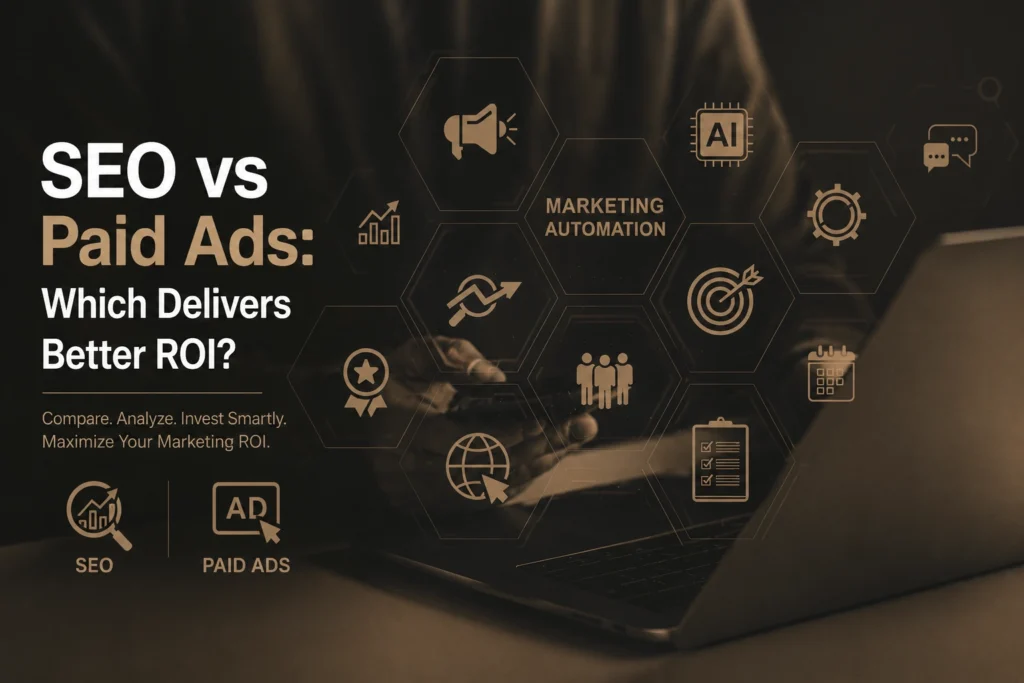
SEO vs Paid Ads Introduction: Understanding the Digital Marketing Dilemma In today’s competitive digital landscape, businesses constantly seek effective ways to attract customers, generate leads, and increase revenue. As a result, two marketing strategies often dominate the conversation: SEO and paid advertising. While both approaches can drive traffic and conversions, many business owners struggle to determine which delivers the best return on investment (ROI). Moreover, the answer is not always straightforward. The effectiveness of SEO and paid ads depends on several factors, including business goals, budget, competition, and timeline. Therefore, understanding the strengths and limitations of each strategy is essential before making a marketing investment. This article explores the differences between SEO and paid ads, evaluates their ROI potential, and helps businesses make informed decisions. What Is SEO and Why Does It Matter? Search Engine Optimization (SEO) is the process of improving a website’s visibility in organic search engine results. Through keyword optimization, content creation, technical improvements, and link building, businesses can increase their rankings on search engines and attract relevant traffic. Furthermore, SEO helps establish long-term credibility and trust. When users see a website consistently appearing in search results, they often perceive the brand as authoritative and reliable. Consequently, businesses that invest in SEO can build sustainable online visibility without paying for every visitor. Understanding Paid Advertising Paid advertising refers to promotional campaigns where businesses pay to display ads on search engines, social media platforms, and other websites. Popular advertising platforms include Google Ads, Facebook Ads, LinkedIn Ads, and Instagram Ads. These platforms allow marketers to target specific audiences based on demographics, interests, and online behavior. Additionally, paid ads offer immediate visibility. Unlike SEO, which may take months to generate results, paid campaigns can drive traffic almost instantly. Therefore, businesses seeking quick exposure often turn to paid advertising as a primary marketing strategy. Comparing Traffic Quality One of the most significant factors when evaluating ROI is traffic quality. Although both SEO and paid ads can attract visitors, the intent behind those visits often differs. SEO typically attracts users actively searching for information, products, or services. Because these visitors have a specific need, they often engage more deeply with the website. Consequently, organic traffic frequently delivers higher trust levels and stronger long-term customer relationships. On the other hand, paid ads can target highly specific audiences. While this precision can generate qualified leads, some users may click on ads out of curiosity rather than genuine purchase intent. Therefore, the quality of paid traffic depends heavily on campaign targeting and optimization. Cost Analysis: SEO vs Paid Ads When comparing costs, businesses must consider both short-term and long-term expenses. SEO requires investments in content creation, technical optimization, keyword research, and link-building efforts. Although these activities involve ongoing costs, the traffic generated does not require payment for every click. In contrast, paid advertising operates on a pay-per-click or pay-per-impression model. Every visitor acquired through ads comes with a direct cost. Consequently, advertising expenses increase as traffic volume grows. While paid ads provide immediate results, they can become costly over time, especially in competitive industries. The Speed of Results Speed is often a deciding factor when choosing between SEO and paid advertising. Businesses launching a new product or promoting a time-sensitive offer frequently need immediate visibility. Paid ads excel in this area because campaigns can begin generating traffic within hours of launch. As a result, businesses can quickly test offers, gather data, and drive conversions. This rapid response makes paid advertising attractive for short-term objectives. However, SEO requires patience. Search engines require time to crawl, index, and assess web content. Although results may take several months to appear, the benefits often continue long after the initial investment. Therefore, SEO serves as a powerful strategy for businesses focused on long-term growth. Measuring Return on Investment ROI remains one of the most important metrics in digital marketing. To determine which strategy delivers better ROI, businesses must compare the revenue generated against the costs incurred. SEO often produces a higher long-term ROI because organic traffic continues to flow even after optimization efforts are completed. For example, a well-ranked article can generate visitors and leads for years without additional advertising expenses. Consequently, the cumulative value of SEO can be substantial. Meanwhile, paid advertising offers more predictable and measurable results. Marketers can track impressions, clicks, conversions, and revenue in real time. However, once the advertising budget stops, traffic and leads often decline immediately. Therefore, the long-term ROI of paid ads may be lower than that of SEO. Building Brand Authority and Trust Trust plays a critical role in consumer decision-making. When potential customers encounter a brand repeatedly in organic search results, they often develop greater confidence in the company’s expertise. SEO supports brand authority by publishing valuable content that addresses customer questions and concerns. As a result, businesses position themselves as industry leaders while improving their search rankings. Furthermore, informative content can generate backlinks and social shares, strengthening brand reputation. Paid ads, while effective for visibility, do not always generate the same level of trust. Some users intentionally skip advertisements and focus on organic results. Therefore, businesses relying exclusively on paid ads may miss opportunities to establish lasting credibility. Scalability and Long-Term Growth Scalability is another important consideration when evaluating marketing ROI. A successful SEO strategy creates a growing library of optimized content that continuously attracts traffic from multiple keywords and search queries. As content accumulates, websites often experience compounding growth. New pages contribute additional traffic while existing pages continue performing. Consequently, SEO can become increasingly cost-effective over time. Paid advertising scales differently. Businesses can increase traffic by raising their advertising budget. However, higher spending does not always guarantee proportional results. Additionally, rising competition can increase advertising costs, reducing profitability. Therefore, scaling paid campaigns often requires careful management and optimization. When Paid Ads Deliver Better ROI Although SEO offers many long-term advantages, paid advertising can outperform SEO in certain situations. For example, businesses launching new products often need immediate awareness and customer acquisition. Similarly, seasonal promotions, event marketing, and

Scroll to Top